-

Theodore Welling, MD
Professor — Division of Surgical Oncology
“When you are a hepatopancreaticobiliary (HPB) cancer surgeon, you aim to improve or extend a patient’s life and hopefully cure their cancer. But we are always trying to improve therapies, so I also focus my work on researching how tumors work and how to treat them using other cancer therapies and surgery together. It’s important that surgeons are involved with cancer therapy planning because an operation often needs to be combined with other treatments. Surgery can be challenging at times, but helping patients is very rewarding.
I balance my work with spending time with my family. Being able to recuperate and find other activities that are equally enriching makes it more invigorating for me to come back to work each day.”
Theodore Welling is a professor in the Division of Surgical Oncology specializing in hepatopancreaticobiliary (HPB) surgery, or liver and pancreas surgery. When he isn’t at the hospital, he enjoys running, hiking, traveling and spending time with his wife, son and daughter.
-

Azniv Mattos
Health Professions Education Specialist — Division of Acute Care Surgery
“I originally came to San Diego to pursue a teaching credential. While I was preparing to apply for school, I worked as a temp at the Shiley Eye Institute at UC San Diego. However, I enjoyed my role, so I decided to stay and later joined the Departments of Ophthalmology and Radiology and, finally, the Division of Acute Care Surgery in the Department of Surgery.
For most of my time in the division, I have been the executive assistant to the chief and trauma medical director. But in March of 2025, I took on a new role as the health professions education specialist. Now, I coordinate the trauma fellowships, courses, shadowing and rotations and all things education-related within the division. Working in education aligns with my original interest in teaching, and seeing trainees become professionals is really rewarding.
I’ve now been working in acute care surgery for 13 years. We are a tight-knit group, and it feels like a family.”
Azniv Mattos is the health professions education specialist in the Division of Acute Care Surgery. Outside of work, she loves hot yoga, baking, traveling and spending time with her husband and dog. They plan to take a trip up the California coast this summer.
-

Ava Armani, MD
Associate Professor — Division of Breast Surgery
“My parents were both physicians, and I enjoyed biology, so a career in medicine was always on my radar. But it wasn’t until I completed a surgical oncology rotation that I was inspired to pursue surgery. I remember during one operation, I helped remove a large tumor from the patient's abdomen. Being a part of a patient's cancer operation was really rewarding.
Looking back, I often think about how who you work with can influence so much of where you end up. Dr. Anne Wallace, my mentor during my residency at UC San Diego, and other faculty inspired me to pursue breast surgery and helped me see myself in a surgical career. Now, one of my favorite parts of my job is mentoring fourth-year medical students. My training experiences helped me realize the influence that mentors can have, and being a mentor now myself is a real full-circle moment.”
Ava Armani, MD, is an associate professor in the Division of Breast Surgery. Outside of work, Armani enjoys being outdoors and with her family. She has climbed Mount Kilimanjaro, mountain biked in Patagonia, sailed around the Galapagos Islands and hopes to have more outdoor adventures in the future.
-

Gabe Schnickel, MD, MPH
Division Chief — Division of Transplantation and Hepatobiliary Surgery
“As I moved through high school, I had no intention of going to college. My goal in life was to become a professional cyclist. But when I was pursuing a career in cycling in Europe, I was hit by a car and spent a couple of weeks in the hospital. After that, I decided to pursue something less dangerous.
I didn’t realize abdominal transplant surgery was my path until my fourth year of surgical training. I was captivated by both the technical aspects and the transformative nature of it. Transplant surgeries can completely transform the life of a patient and their friends and family. To see a patient on the other side of a successful transplant and realize how that operation changes their present and future is what keeps me going. It isn’t just the patient’s life that you’ve touched, but all the lives that the patient touches as well. The impact that we, as transplant surgeons, have on the world ripples. That is why we bring our best every day and every time — for that patient and their community, anything less would be unacceptable.”
Gabe Schnickel is chief of the Division of Transplantation and Hepatobiliary Surgery and the surgical director of the UC San Diego Liver Transplant Program. Outside of the hospital, he enjoys biking and skiing with his wife, Valerie, and two kids, Brady and Ellie.
-

Jay Meisner, MD
Pediatric Surgery Fellow — Division of Pediatric Surgery
“I had a wonderful pediatric surgery mentor in medical school. We would talk about cases, but then go to dinner, play racquetball, and attend the opera. Having this intense mentorship was a very alluring aspect of surgery — I loved the close collaboration and teamwork.
Now, I try to be a mentor as much as I can. Whenever we have a medical student or undergrad on our service, I’m always telling them to reach out and contact me for anything. I also try to make sure that everyone participates. It’s easy for one or two students to not speak up because of nerves or shyness. I try to make it a point to seek out the ones who are not participating and figure out what I can do to help them engage. I enjoy helping people break down their own barriers to grow.”
Jay Meisner is a pediatric surgery fellow in the Division of Pediatric Surgery. When he isn’t at work, you can find him in Palo Alto visiting his fiancée, Anna, and dog, Emma, where they like to go on hikes and eat fancy dinners.
-

Jessica Hudson, MD, MS, MPHS
Assistant Professor — Division of Cardiovascular and Thoracic Surgery
“College was not necessarily a destined path for me. I wasn’t sure it was going to be an option, financially. But I applied to college as a requirement for an AP English class and managed to get a full ride to my reach school, Duke University.
In the first few years of undergrad, I had huge imposter syndrome and almost dropped out. But my dad told me I had to wait at least one more semester to see if things changed. I later got involved with the local emergency medical services group on campus. They were a group of people with whom I could be my most authentic self. This helped me find my path to medicine and eventually surgery.
I think that at each stage of life, the challenges are different. Early on, it was mostly coming from a low socioeconomic status — doing work study and having to supplement in ways my peers did not. But as I’ve progressed, I’ve found other challenges. My three guiding principles have become that I want to be an excellent surgeon, stay married, and have my kids know who I am. I've had to sacrifice some elements of each of those three along the journey, and while it is something I still struggle with, I've learned that it is not a work-life balance but a work-life blend."
Jessica Hudson is an assistant professor in the Division of Cardiovascular and Thoracic Surgery. When she isn’t at the hospital, she spends all her free time with her husband and children. This spring, they plan to take a trip to Japan.
-

Julie Garrie
Academic Analyst — Academic Resource Center, Vice Chancellor for Health Sciences
“My love for surgery stems from being the daughter of a surgeon. My father, Dr. Sander Garrie, was close friends with Dr. Marshall Orloff, the founding chair of the UC San Diego Department of Surgery. Growing up, I followed a surgeon’s schedule and learned the rhythm of a surgeon’s life. I understand how being a surgeon impacts a family, and my respect for surgeons couldn’t be greater.
Now, I am an academic analyst for surgeons and other faculty at UC San Diego. This means I follow faculty throughout their time at UC San Diego — I build their academic portfolios and advocate for their academic careers. Working with the Department of Surgery is truly a dream come true for both my father and me. I love working for these wonderful, inspired people, and it’s a privilege to support them the best that I can.”
Julie Garrie is a senior academic analyst at the Academic Resource Center for the Vice Chancellor of Health Sciences, supporting 18 departments, including the Department of Surgery. In her free time, Garrie is a musician and enjoys gardening and spending time with her three children. In the future, she hopes to join a local symphony playing the flute or piano.
-

Timothy Fairbanks, MD
Division Chief — Division of Pediatric Surgery
“The personal side of medicine is hugely important. You should never lose sight of the fact that, in surgery, there are not cases — there are patients and families. You can be the best doctor in the world, but if the family doesn’t trust you, there isn’t going to be a good outcome. When a parent grabs my arm and says, ‘Please take care of my child,’ I know what that means as a doctor, but also as a parent. A child is the most valuable thing a parent has in the whole world. It is an honor for me and my team of pediatric surgeons to be trusted by families and help make their child feel better.
There are certain patients that, by being a pediatric surgeon, you’ve really made a profound difference in their lives. We’ve done surgeries on kids with serious diseases and injuries who are now out living and benefiting society. To have been a part of that is very humbling, and it makes it easy to stay motivated.”
Timothy Fairbanks is chief of the Division of Pediatric Surgery at the UC San Diego Department of Surgery. When he is not at work, he enjoys spending time with his wife and kids. Together, they go camping, breed horses and explore San Diego.
-

Shay Castro
Executive Assistant to the Chair
“Having my daughter at 18 changed the course of my career. I knew I wanted a job where I could give back and take care of people, but I also wanted to be around for my daughter. I started my career as a medical assistant caring for those with dementia. I then gained over 10 years of experience in healthcare — in call centers, surgery scheduling, interpreter services and hospital administration — and got my degree in business. I’m now working as the executive assistant to the chair of the Department of Surgery and eventually want to earn my master’s in business administration and take some leadership courses.
I’ve worked myself up from the bottom. I want my kids to know that challenges will come, but they don’t have to stand in the way of where you want to go. I will support my kids in whatever they want to do; life is short, so use the time you have to do what makes you happy.”
Shay Castro is the executive assistant to the chair of the Department of Surgery. When she isn’t at work, she is taking care of her family — father, siblings, husband and children. In her free time, she enjoys hot yoga, walking around the city and watching movies.
-

Mahmoud Malas, MD, MHS
Division Chief — Division of Vascular and Endovascular Surgery
"I love the urgency of surgery. I love the creativity required to solve complex problems. I love the deep relationship formed with the patients and their families. Seeing a successful operation completely transform a patient feels almost like a miracle — one created through skills, precision and compassion.
My philosophy is that I make decisions as if the patient were my own family. Would I offer this operation to my mother, father, sister or brother? Does the benefit genuinely outweigh the risk? This mindset has kept me honest, humbled and patient-centered, especially when the choices are complex or the outcome is uncertain.
Being a surgeon or health care worker is not just a career. It is a privilege. People trust us with their life, their fears and their families. Honor that trust with integrity, professionalism and empathy. This sense of purpose has stayed with me throughout my career. I often feel like I didn’t choose surgery — surgery chose me. And every day, I'm grateful that it did.”
Mahmoud Malas is the chief of the Division of Vascular and Endovascular Surgery. Outside of the hospital, he enjoys spending time with his wife, three children, friends and community — slowing down and enjoying the moments that ground him.
-

Benjamin Keller, MD
Pediatric Surgeon — Division of Pediatric Surgery
“Many people say they could never do pediatric trauma because it is too difficult to see kids with injuries that are not their own fault — they didn’t know better, or it was a complete accident. But I look at it from the flip side. Being there for a child in their most vulnerable time makes the difficulty worth it. It is an honor to be trusted with people’s children and family members, and I feel incredibly lucky to do what I do.
Although the job can be difficult. One of my mentors once advised me to keep all the cards my patients give me in a file in my office. When I have a bad day, I open that file up and read those cards. It’s a reminder, as I walk out of my office and go home, that the things we do make a difference.”
Benjamin Keller is the surgical director of the neonatal intensive care unit (NICU) and pediatric intensive care unit (PICU), surgical extracorporeal membrane oxygenation (ECMO) director, vice chair of the Division of Pediatric Surgery, vice chair of the Department of Surgery at Rady Children’s Hospital-San Diego and an assistant professor in the Department of Surgery. Outside of work, he enjoys spending time with his family.
-

Laura Haines, MD
Division Chief — Division of Acute Care Surgery
“I was always interested in medicine. I thought I was going to be a veterinarian like my grandfather. In high school, I decided to get my certified nursing assistant license. Nothing in my life had ever felt so natural — I enjoyed learning, had fun, and was inspired by the environment. Later, when I went to medical school, I was enamored with the surgeons who taught us in anatomy class. That was when I knew surgery was the place for me.
I enjoy trauma and acute care surgery because it allows me to harness and control chaos. I do much better with the unplanned. I find it incredibly rewarding to be the person who takes care of patients when something unexpected happens. I also like the teamwork involved in our cases — we work together to save a life in real time. We call on each other and are on backup for each other. That team dynamic is what drew me to this field.”
Laura Haines is the chief of the Division of Acute Care Surgery, the UC San Diego Health Trauma Medical Director and the medical director of the surgical intensive care unit. When she isn’t in the operating room, she enjoys exercising, cooking, and spending time with her family and dog, Diesal.
-

Aleah Brubaker, MD, PhD
Transplant Surgeon — Division of Transplantation and Hepatobiliary Surgery
“I was interested in STEM fields from a young age. I used to visit patients in the hospital with my mom, a urogynecologist, and later volunteered in the emergency room to learn more about medicine. I learned that I really enjoyed the personal connections physicians made with their patients, and that’s what ultimately pushed me to the medical side of science — the human connection."
When I was finishing college, I was trying to sort out how I could connect research with the human side of medicine. I took a year off to work in a lab and met some M.D./Ph.D.-trained physician-scientists who were using their degrees in various ways. Those experiences encouraged me to pursue a dual degree, and so I completed a Ph.D. during the middle of medical school.
A major motivation for me is uniting basic and translational research with clinical outcomes. For me, our patients are the ultimate motivating force to keep improving, driving forward scientific discovery.”
Aleah Brubaker is an assistant professor in the Division of Transplantation and Hepatobiliary Surgery and leads the Transplant Revitalization Laboratory at UC San Diego. When she isn’t at work, you can find her with her husband and daughter — going to the beach, the pool and on hikes.
-
John Nigro, MD
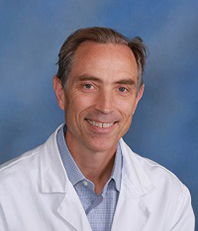
Congenital Surgeon — Division of Cardiovascular and Thoracic Surgery
“My father was a surgeon, so I’ve always been interested in surgery and hands-on care. I matched for residency at the University of Southern California (USC) and Los Angeles County Medical Center and Los Angeles County Medical Center and Children’s Hospital Los Angeles (CHLA). That was an amazing experience and at CHLA, I was able to care for kids with heart disease. I became very interested in this specialty and ended up doing my fellowship in cardiac surgery at USC and an additional year of training in pediatric heart surgery and transplantation at CHLA.
Now, I provide care for children with significant heart conditions. Sometimes, we are confronted with really difficult situations, so it’s exciting when I'm able to help them and meet their health care needs. That's probably the first motivator for what I do. The second motivator is that I get to work with a fantastic team that constantly inspires me. There is also the desire to do good — I want to help people and make a positive impact in their lives. However, I don't have all the answers, and that can be challenging. But I enjoy being innovative and trying to come up with newer and better solutions for children, especially when they grow up and become amazing members of the community.”
John Nigro is the director of the Heart Institute and chief of pediatric cardiothoracic surgery at Rady Children’s Hospital; surgical director of the adult congenital heart program at UC San Diego; and a professor in the Division of Cardiovascular and Thoracic Surgery. Outside of surgery, he enjoys hiking, fishing, gardening, reading and appreciating the beauty of San Diego.
-

Erika Somers
Program Administrator — Division of Vascular and Endovascular Surgery
“I always knew I would find my passion in healthcare; I just wasn’t sure where. I went from being a front desk administrator to checking in patients to authorizations to billing. Eventually, I found my passion in administering residency and fellowship programs in the Department of Surgery, and I’ve been loving it ever since.
A lot of people don’t realize what residents and fellows sacrifice to get to where they are. For example, some people leave their home country to come the United States to train to be a surgeon. As a program administrator, I'm here to make their lives easier and ensure they're not alone. Another part of my job is checking in on trainees. They have a lot going on, and it gets challenging sometimes. I'm the one who reminds them of why they wanted to go into healthcare and encourage them to hold onto that spark. The most rewarding part of what I do is seeing residents and fellows complete their training. I love that I get to be a part of their journey from beginning to end.”
Erika Somers is the program administrator for the Division of Vascular and Endovascular Surgery's residency and fellowship programs. In her free time, she enjoys water activities, such as swimming, surfing and paddle boarding.
-

Samuel Eisenstein, MD
Associate Professor — Division of Colon and Rectal Surgery
“After I finished my fellowship training, I knew I wanted to be an academic surgeon. I think there is an intellectual stimulation that goes along with academic surgery. In medicine, we make a lot of assumptions, but we don't necessarily always have evidence. I think the analytical part of me always wants to know why we do things and why one thing leads to the next. Academic surgery really allows you to explore those questions.
I do love the act of surgery. You have a good relationship with individuals, help people and do great things for them. But there’s probably a greater good that can be achieved by investigating and understanding what we do in medicine through academic surgery. You can help as many people as possible.”
Samuel Eisenstein is an associate professor in the Division of Colon and Rectal Surgery. When he isn’t at the hospital, you can find him at a concert or traveling the world with his family. They plan to take a road trip up the central and northern California coast this fall.
-

Leila Adler, MA
UC San Diego Center for Research, Education, Innovation and Transformation in Organ Donation (REIMAGINE) Managing Director
“My youngest son, Luke, showed me what an amazing time in medicine we live in. When Luke was born, his eyes never uncrossed, so he had double eye surgery at 13 months old. Going through that experience was incredibly stressful, but it also taught me what was possible in pediatrics and surgery. I left that experience with a strong appreciation for modern medicine.
I also lost my mother to pancreatic cancer. As traumatizing as that experience was, I met so many amazing people who were trying to help us while also trying to cure this awful disease.
My gratitude for these experiences and wanting to pay it forward motivate me in my work. At REIMAGINE, our mission is to eliminate the waitlist — no patients waiting, no organs wasted. In my role, I work to execute initiatives in support of that mission, like our annual symposium, pilot research grants and hands-on training programs. Having the very personal touchpoints from my life in medicine reminds me that my work matters. So even if there are days when I might find getting things done particularly challenging, I am reminded of why I am doing this — I love my job.”
Leila Adler is the managing director for the UC San Diego Center for Research, Education, Innovation and Transformation in Organ Donation (REIMAGINE) in the Division of Transplantation and Hepatobiliary Surgery. Outside of work, Leila spends her time with her husband and two sons — swimming, hiking and visiting the beach.
-

Alexander Todd
Data Analyst
"I studied nursing in university; however, everything changed during my senior year when I was in a bad car accident. I ended up having six different procedures, one of them being experimental, and had an extensive recovery. As a result, I had to drop out of my nursing program.
I wanted to continue school online during my recovery, so I changed my major to healthcare administration. In 2020, I graduated with my bachelor’s degree and was offered a job at UCSF.
While working at UCSF, I was exposed to scientific data, and I grew increasingly interested in data science. I taught myself how to program using free apps and websites. I later applied to a data science program at UT Austin, but a few months after starting the program, I was offered a job at UC San Diego as a data analyst in the Department of Surgery. I now use these programming skills that I invested a lot of time into.
My long-term goal is to be a data scientist in the healthcare industry. After my own experiences with surgery and an experimental treatment, I am passionate about working with a team to create better outcomes for other patients."
Alexander Todd is a data analyst at the UC San Diego Department of Surgery. When he isn’t in the office, you can find him running, gardening, going to the beach or Padres games, and spending time with family and friends. -

Himangshu Sonowal, PhD
Assistant Project Scientist — Division of Surgical Sciences
“I’m originally from Assam, a culturally rich and diverse state in northeastern India known for its tropical climate and for producing nearly 10 percent of the world’s tea. I completed my bachelor’s, master’s and Ph.D. degrees there. During my Ph.D., I became increasingly inspired by the United States, especially its reputation as a global hub for cutting-edge research. That inspiration led me to move to the United States for my postdoctoral training.
While most of my time is dedicated to laboratory research, I have a strong passion for teaching and mentoring, particularly undergraduate and high school students. Their energy and curiosity are incredibly rewarding to work with. When I teach, I try to connect scientific concepts to everyday experiences — it really helps them engage and get inspired. So, for me, it’s not just about the research; I actively seek out opportunities to teach whenever I can. I truly enjoy doing both.”
Himangshu Sonowal is an assistant project scientist in the Division of Surgical Sciences. Outside the lab, he loves exploring the outdoors. He has visited nearly every national park in the region and is now looking forward to his next adventure: exploring the majestic redwood forests of Northern California with his wife.
-

Rachel Kwinn
Division Coordinator — Division of Minimally Invasive Surgery
“The root of my passion is supporting others and helping them get to their next step. I was initially a school counselor who supported students with balancing classes, college applications and mental health. While my heart was in this work, it proved to be very challenging. So, when the event coordinator position at the Center for the Future of Surgery opened up, I thought it was a good opportunity for me to make a shift. I supported, coordinated and planned lab activities for residents to help develop their patient care skills. I like that in both roles, I still got to support students through their journeys.
Now, in my new role as a division coordinator, I support faculty and help them get through their busy weeks. I am also a mentor at The Preuss School UC San Diego, which gives me a little more of a school counselor ‘feel.’ I am excited to support my student, help her get to college and be there for her.
I wish students knew that there are many different types of careers. Just because we grew up thinking that we could be a teacher, doctor or lawyer does not mean there are not more opportunities. There are a lot of different roles, and you can find what fits."
Rachel Kwinn is the current division coordinator for the Division of Minimally Invasive Surgery and Center for the Future of Surgery. In her free time, she is an auntie to several nieces and nephews, a lover of local coffee shops and roots for the San Diego Padres. -
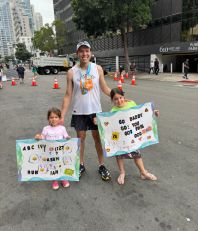
Ian Glenn, MD
Assistant Professor — Division of Cardiovascular and Thoracic Surgery
“When I first started medical school, I was interested in surgery. I liked the technical part of things and working with my hands. People always say that this is the first decision you make in medicine: Do you want to be in the operating room or not?
But, when I did a cardiac surgery rotation as a medical student, I hated it. It was a tough group of people to work with, and it made me wonder if the culture of surgery was for me. So, I did a year of internal medicine instead. But I ended up missing surgery, specifically cardiac surgery, a lot. So, I came back.
I think this negative experience has shaped how I teach and treat people in the hospital. That rotation was only a month, but it changed the trajectory of my life for years. So, I try keep in mind that even limited interactions can have an influence. I want to make being on service a positive experience, because you never know what impact you can have."
Ian Glenn is an assistant professor in the Division of Cardiovascular and Thoracic Surgery. When he isn’t at the hospital, he enjoys going to the beach, swimming, and skiing with his wife and two daughters. As a father and physician, he hopes to teach his daughters the importance of caring for people in need.
-
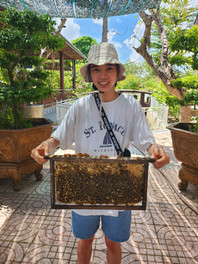
Samantha Phan
Communications Intern
“A skill I practice often in the Department of Surgery is making research digestible for the average person. Research language can often be inaccessible, and misinformation frequently spreads. Rephrasing and adjusting language so people can understand it is important, and I think it’s cool to work in a field that combats misinformation. It inspires me to pursue communications long-term.
I also enjoy the interviewing aspect of communications because it allows you to connect with people. I would say it’s my favorite part of my job. It's always awkward at first, but once you get to that point where you can be honest with somebody, it's really beautiful.”
Samantha Phan was born and raised in Sacramento, California. When she isn’t in the communications office, you can find her reading comics, exploring museums or nose deep in a good book.
-
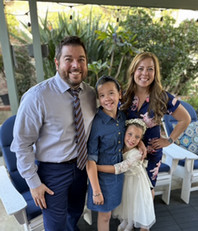
Vince Genna, NP
Nurse Practitioner — Division of Breast Surgery
“I’ve worked with cancer patients for a while, and I have grown to understand that you must meet people where they're at. Oftentimes, you are giving them the worst news they’ve ever had. You need to give them space to process.
I think all of us who do this job want to fix people. If there’s a problem, we want to figure out a plan. But one of the reasons why my team trusts me to see new patients is because I’ll spend time with them to not only go over the diagnosis next steps, but also provide them with social and emotional support. Breast cancer, along with other cancers, is becoming a far more personalized medical field, and being a nurse pracititioner puts multidisciplinary care at the heart of it.”
Vincent Genna is a nurse practitioner in the Division of Breast Surgery at the Department of Surgery. When he isn’t at the clinic, he enjoys spending time with his family — traveling, visiting Disneyland and going to Padres games.
-
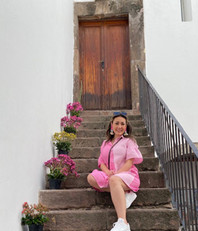
Pamela Lugo
Residency Program Coordinator — Division of Plastic Surgery
"I first came to UC San Diego as a medical assistant, and now I’m in the academic office as a residency program coordinator. My role blends admin support, event coordination and resident engagement. I love supporting the plastic surgery team and making a difference behind the scenes.
I spend a lot of time with the residents and often reflect on my relationships with those who have graduated. They're out there in the real world, having beautiful results in their surgeries. I once played a role in their life, and it makes me so proud to see their growth and continued success. I plan to stay in plastic surgery for the rest of my career and continue playing a part in building a program known for producing skilled and compassionate leaders.”
Pamela Lugo is from Chula Vista, California, where she fondly recalls life as a 90’s kid playing with friends until nightfall. Outside of administration work, she enjoys cosmetology and spending time with her family. -
Janeen Williamson, BSN, RN, CBCN
Case Manager and Certified Breast Care Nurse — Division of Breast Surgery
"My maternal grandfather was diagnosed with a very rare blood cancer, so I spent a lot of time in an oncology ward as a child. Thinking about it now, it is an unusual place for a child to be. But it was comfortable because I spent so much time there, and the staff always helped to normalize my environment.
My first nursing job was supposed to be in medical-surgical floor, but the hiring manager offered one in oncology. Accepting the oncology position made me eligible to apply for the surgical nurse case manager position here at the Department of Surgery. To know a loved one who is going through a terminal illness is a unique position to be in. There's a certain level of empathy that I can provide having had that experience.
I try to be honest and compassionate in the way I deliver information to my patients and coworkers. I also like to be a trusted messenger. If a patient tells me about their experience, I acknowledge their vulnerability and try to advocate for them. Even if I can’t solve something for a patient, I hope that when they look back on their experience, they can at least say the person they engaged with was positive, helpful and provided a listening ear.
Also, I gotta give a shout out to my team! This is a place where I truly believe the people actually want to be here and help patients. We all have the same goal and know we're going to do our absolute best to provide exceptional, compassionate care to everyone we serve.”
Janeen Williamson is from Southern California and Alabama. Outside of nursing, she enjoys spending time with family, being at church and exploring the outdoors with her poodle, Louis. -
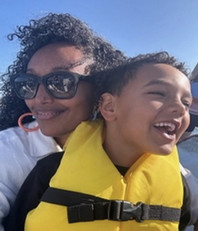
Winta Mehtsun, MD
Assistant Professor — Division of Surgical Oncology
"‘One day at a time. Stay humble. Continue learning.’ Those are the things that guide me in moments of doubt, frustration or burn out. I remind myself that there's a lot of gratitude in what I do. I focus on stomach cancers and sarcoma. I do other general surgical oncology, but I really love the patient population that I get to take care of. Early on, it was very clear to me that I'm not here to just save people. It's all about the framing. If you only consider a win saving someone's life and eliminating their cancer forever, then it's going to be a real tough journey in this career. Sometimes, it's about giving them the opportunity to have more quality time with their family — be around for a birthday or an anniversary, right? That's the win.
Currently, I'm focused on health disparities and the quality of cancer care that we deliver nationally, locally and internationally. We have a high gastric cancer population here in San Diego and within the UC System. My team’s looking for molecular drivers of the differences we see between minority and non-minority patient outcomes. Then, we’ll examine that research within the context of socioeconomic factors like insurance access, income and neighborhood. I want to address some of the dramatic disparities we see within the United States healthcare system and make novel, meaningful contributions.”
Winta Mehtsun is an assistant professor in the Division of Surgical Oncology and an adjunct assistant professor at the Herbert Wertheim School of Public Health and Human Longevity Science at UC San Diego. Outside of work, she enjoys raising her son, exercising, concerts and travel. -

Isaac Meyer, NP
Nurse Practitioner — Division of Plastic Surgery
"I grew up with six sisters. During high school, my sister was a nurse's assistant. She would come home and tell me the most remarkable stories about the patients she attended to. I just found the work she did to be so fascinating.
Now, as male nurse practitioner, I'm a minority in the nursing field. I feel like having sisters has really shaped the way that I work with my colleagues by helping me relate to women more intuitively and understand the challenges they face, both in the workplace and in life. Growing up surrounded by strong, empathetic women has made me more compassionate, open-minded and attentive to the needs of everyone around me. I'm around so many strong women every day, and it makes me appreciate the power of teamwork and mutual respect in nursing."
Isaac Meyer is a nurse practitioner in the Department of Surgery's Division of Plastic Surgery and at the Asylum Seekers Shelter. When he isn’t working, you can find Meyer skiing, beekeeping or camping with his husband and 10-year-old daughter. -
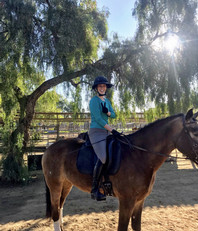
Ellen Fink, PA
Physician Assistant — Division of Colon and Rectal Surgery
“I enjoy being a resource for patients. Being a physician assistant is great because you can communicate with and reassure them. I'm always in direct contact with the surgeons, so I'm kind of like a gateway between the two. It’s very fulfilling.
One of the best aspects of my job is definitely the procedures. I've always loved procedures, such as abscess drainage, banding, skin tag excision or any minor procedure. I'm in the operating room Wednesday mornings, which I really love. I always loved surgery, and that's how I ultimately got involved in colorectal surgery. What you’re doing is just so tangible — I'm making this person feel better.”
Ellen Fink is originally from Lake Orion, MI. When she isn’t at the hospital you can find her jogging along the Bay or horseback riding. -
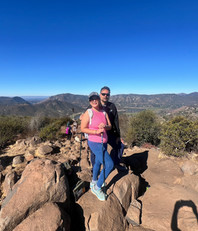
Carmina Mariduena, MSN, RN, CAPA
Clinic Manager
“My youngest brother had a massive heart attack at 34, and he was unconscious for 20 minutes. Being a healthcare provider, I knew being down for 20 minutes means no brain activity. It is hard when you know as a healthcare provider the prognosis of the outcome. It is really really hard sometimes, but you have to think as a healthcare professional, ‘What would he want?’ He wouldn't want to suffer. He wouldn't want my mom, my dad or myself taking care of him in this vegetative state. He was in the hospital for seven days, and on that fourth day I asked for an MRI, and there was minimal brain activity. I had to tell my mom and my dad, ‘I think we need to put him on comfort care.’ This is one of the hardest things that I’ve ever had to do. I had these conversations with families when I worked at the ICU, but when it comes to your own family it's very difficult, even though I dealt with this situation at work multiple times.
Tomorrow is never promised. Hold you family members tight and enjoy their presence. You don't know what the future will bring.”
Carmina Mariduena is originally from Chicago, IL and is currently a Clinic Manager for UTC Digestive Diseases at the Department of Surgery. Outside of work, she enjoys spending time with family and friends, traveling and going on hikes, as well as treasuring small moments with her parents, husband, two sons and dog. -
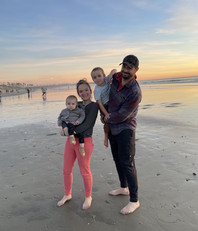
Katharine Hinchcliff, MD
Assistant Professor — Division of Plastic Surgery
“I'm part of a surgical charity called Fresh Start Surgical Gifts. It flies uninsured children to Rady Children’s Hospital, so we can perform surgeries at no cost to them. I started participating in that program right when I got to UC San Diego Health. It is my favorite thing that I do because these are not only patients that need help but patients that wouldn’t get help if you weren't there.
A fun fact about me is that I’m a triplet. I have two sisters. I remember it took me a long time to figure out who I was outside of them. But, when you are on your own, you come to realize what your strengths are.”
Katharine Hinchcliff is a plastic surgeon in the Department of Surgery's Division of Plastic Surgery, Department of Orthopedic Surgery and Rady Children's Hospital. Outside of the hospital, her favorite thing to do is take her kids to the Y.M.C.A.
-
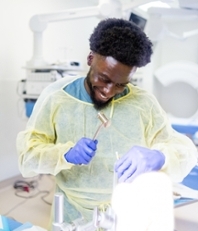
Olatunde Bashorun, MD
Plastic Surgery Resident
“I find the difference that plastic and reconstructive surgery can make in a patient's quality of life very gratifying. I appreciate working with patients to devise a personalized plan before operation, having the privilege to bring their desired outcome into fruition and seeing their recovery process throughout follow-up. The journey that plastic and reconstructive surgeons embark on with their patients — towards restoring a significant level of confidence, independence and function — is one that truly fills my cup.
Plastic and reconstructive surgery is very unique. All of the distinct experiences each patient population presents with greatly varies based on your sub-focus within the discipline. Furthermore, there is a lot of diversity in problem solving, especially when interfacing with other surgical specialties. It sparks your curiosity, keeps it fresh and challenges you to grow. The aspect of ‘lifelong learning’ is truly fostered with each patient interaction.
Lastly, I am passionate about mentorship, education, representation and mitigating health disparities. As a first-generation African-American and the first person in my family to traverse unfamiliar roads in medicine, I think it is essential to lift as you climb.”Olatunde Bashorun is from Staten Island, NY. Outside of his residency, he enjoys basketball, hiking, half-marathons, working out, exploring San Diego and spending time with family. -
Michael Turner, MD
General Surgery Resident
“There are three things that motivate me in my work. One is my family. I want to do something that my wife and kids will be proud of. Two, when you get to know your patients, you become invested in them and want to see them do well. I spend a lot of time thinking, worrying and reading about my patients, trying to figure out how I can help them. I want to see them get better. Third, I always want to be better. In this field where perfection will never be achieved, I believe you should always try to be excellent. I remember my mistakes — the things I wish I knew or was better at — and I try to improve. I wake up every morning with the goal of being a better doctor.”Michael Turner is a chief general surgery resident at the Department of Surgery. After finishing his residency, Turner will pursue a surgical oncology fellowship at Massachusetts General Brigham/ Dana-Farber Cancer Institute in Boston, MA. When he isn’t working, Turner enjoys spending time with his family. -

Brandon Harris, MD
Trauma, Surgical Critical Care, Burns and Acute Care Surgery Fellow
“I did my residency in West Virginia, and 95% of my patients were from underserved populations. Naturally, I developed a passion for serving these patients, which I’ve been able to continue through UC San Diego’s fellowship. We're taking care of some of the most critically ill patients in the surgical ICU and seeing them make a meaningful recovery evokes a feeling that I cannot explain. I've driven home so many times to the sun rising and told myself, ‘I made a positive difference in that patient's outcome.’ I don't care how exhausted I am. That alone is worth it.
I would say, for anyone who wants to get into the medical field — especially as an international graduate or physician of color — it's unfortunate, but you have to be twice as good just to be considered on the same level as your U.S. graduate counterparts. But there is a light at the end of the tunnel. It's a very dim light at the beginning of the journey, and you can't really see it. But it's there, and as you get closer, it definitely gets brighter.”
Brandon Harris is from Antigua and Barbuda where he did tennis, water sports, martial arts, and track and field. Outside of his fellowship, he enjoys the beach, exploring San Diego, remaining physically active and spending time with his fiancé and six-month-old son.
-
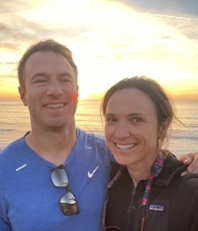
Ann Gaffey, MD, MS
Assistant Professor — Division of Vascular and Endovascular Surgery
“Vascular surgeons are kind of like human plumbers. We operate all over the body on different blood vessels. We can clean out those pipes, we can build new pipes or we can realign those pipes. Our goal is to improve blood flow, which reduces the high rate of limb loss in patients with peripheral arterial disease and diabetes.
Amputation is another cause for limb loss. My research aims to reduce instances of amputation by exploring why patients develop early limb loss, better treatments we can offer them, and which devices improve outcomes for limb salvage — an alternative to amputation that preserves the look and function of limbs in critical condition.
Vascular surgery is a little different than other specialties in that there’s oftentimes a long term follow up of these patients, and you develop a lifelong relationship with them. I enjoy taking care of patients. But I also enjoy teaching. Every day is a new day, and it's always exciting. I'm very lucky."
Ann Gaffey is from Boston, MA, where she danced ballet professionally and spent her summers sailing. She still sails to this day and has also picked up mountain biking. -
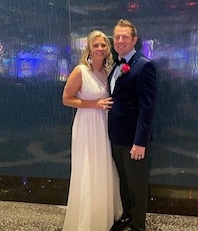
Jennifer Berumen, MD
Associate Professor — Division of Transplantation & Hepatobiliary Surgery
“Growing up, I always liked doing things with my hands. My dad was an OBGYN, and my mom was a nurse. Being around medicine got me interested in it. My dad was a big mentor in general. But he had an orthopedic surgeon friend who I spent a lot of time shadowing and was fairly influential in getting me interested in surgery too.
I would say the most influential person during my residency at UC San Diego was Dr. Kristin Mekeel. She took me under her wing and has been a huge mentor for the last 15 years. Having someone who believes in you and says, ‘You’re doing a good job. Let's take it to the next level. What do you want to do with your life?’ It's helpful to feel like someone thinks you can do it.
Being open and honest without fear of judgment is incredibly important. When you run into failures, you know someone who can help you through it. I know I have this with Dr. Mekeel, and that’s led me to be that way with a lot of my mentees.
One of the rewarding parts of being a mentor is recognizing early on that there's someone who you share the same interests as. It's nice to be able to reach out to that person and be like, ‘I want to help you and get more involved.’ What goes around comes around.”
Jennifer Berumen is from Fort Smith, AR. Her childhood was full of science, softball and soccer. Outside of surgery, she continues to play softball and enjoys spending time with her family and dog. -

Javier Bravo, MD
General Surgery Resident
“Communication is a key feature of quality healthcare. There's a point when you start treating patients where you are almost amazed at how little patients know about what's going on in their body, so it is very rewarding to help them better understand. I would say around 30–40% of the patients we treat at UC San Diego are Spanish speaking patients, and I’m bilingual, which helps with navigating that. You need to communicate things well for patients to be satisfied with the care they’re receiving.
I am currently in a surgical oncology lab that focuses on fluorescence-guided surgery. Essentially, we work with molecular technology that lights up cells, tumors and other structures to make surgery more effective and safer for both surgeons and patients. The nature of the profession of surgery is that there are always new technologies and techniques coming out. It’s a constantly evolving field, and you get to perfect your craft and learn new things. The more tools you add to your repertoire — in terms of knowledge, research and skills — the better you are prepared to treat patients in the right way.”
Javier Bravo is from Mexico City, Mexico. When he isn’t in the operating room or doing research, you can find him at a golf course or continuing childhood hobbies such as swimming and soccer. -
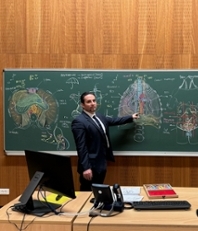
Martin Lhuaire, MD, PhD
Visiting Scholar — Division of Anatomy
“Anatomy and teaching medical students are two of my passions. In France, every anatomist must teach using diagrams on a blackboard, which allows students to fully grasp every aspect of the human anatomy. 10 years ago, when I met Professor Geoffroy Noel, Ph.D., I fell in love with American teaching methods. Noel emphasizes compassion, which I believe is very forward-thinking because it prepares students for clinical practice. Teaching should not only include the anatomical structures I draw on blackboards but also the different lived experiences of patients.”
Martin Lhuaire is a clinical anatomist at the University of Paris Cité, plastic surgeon at the Hôpital Européen Georges-Pompidou Assistance Publique – Hôpitaux de Paris and visiting scholar in the Department of Surgery at UC San Diego. When he isn’t at the hospital (or on a plane), you can find Lhuaire spending time with his family at their vineyard or riding the country roads of the Champagne region on his motorcycle. -
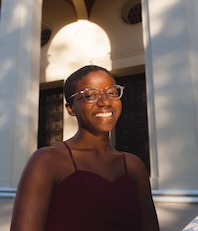
Oluyemisi Bolonduro
Communications Intern
“I mostly write autofiction or autobiographical fiction, and my writing is full of conversations I have with myself. My ideal resonator would be anyone who doesn't always find themselves relating to societal norms. I like to explore the nuances of identifying as a non-binary woman and Nigerian American, tearing constantly between places that people view as binary. Biculturalism is also a big focus in my writing because there are different aspects of my Nigerian background that I'm very in tune with and others that I'm not in tune with — I often experience a kind of national x ethnic imposter syndrome.
I'm drawn to all creative mediums, which is why I enjoy communications so much. I also love the interviewing part of it. I think the aspect where someone shares a part of themselves and celebrates that with the larger community sparks inexplicable joy for me."
Oluyemisi Bolonduro is from Shoreline, WA and Kogi, Nigeria. In her free time, you can find them nibbling on some berries, restarting "The Legend of Zelda: Majora’s Mask" or borrowing too many library books at once.
-
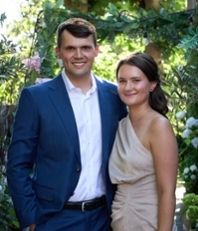
Thomas Handley, MD
General Surgery Resident
“It sounds corny, but I went into medicine so I could help someone who is at the worst point in their life. You're the person they turn to for help. The magical aspect of surgery and medicine is that you're able to help someone in their moment of need, and it's an honor and privilege to be able to do that. Getting into work at five o'clock in the morning doesn't seem so important when it's someone else's life that you've got in your hands.”
Thomas Handley is from Southeast London in the United Kingdom. When he isn’t at the hospital, he enjoys running at Torrey Pines State Park and spending time with his wife.
-
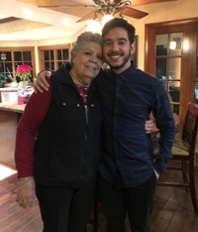
Sean Perez, MD
General Surgery Resident
“I lost my grandma when I was an intern to COVID-19, and I think that’s one experience that has impacted the way I help patients.
A huge reason why I came to San Diego is to work with a large Hispanic population and I can’t imagine myself having the same sense of personal reward elsewhere. I know I’m doing right by my grandma by just the amount of Hispanic patients I see and help. They obviously remind me of her, and I thankfully get the chance make her proud.”
Sean Perez grew up in Upland, California. As he finishes his last year of research, he is excited about getting back into the operating room. Outside of the hospital, Perez enjoys skiing, playing tennis, watching films and trivia.
-
Jason Llaneras, MD
Plastic Surgery Resident
“I was a surgery intern in a busy Los Angeles County Hospital during the coronavirus pandemic, when the whole city shut down. I was having to take care of patients when they were alone, and no one was allowed in the hospital. It was one thing being there for the patients as a healthcare provider, but you also had to be there for them on a very personal level. I look back at those memories — some good, some bad — with the perspective that you’re more than just a healthcare provider at times.”
Jason Llaneras was born and raised in Miami, FL. Now, he loves the gorgeous atmosphere and spending time with friends in San Diego. Outside of the hospital, Llaneras enjoys spending time with friends, running, playing basketball and making the most of every opportunity to relax at the beach.
-
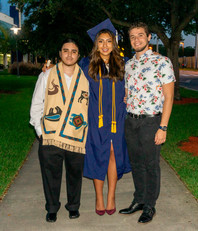
Ruth Laverde, MD
General Surgery Resident
“With every Spanish-speaking patient, I see a little bit of my family — their resilience, their quiet strength and concern. I remember as a medical student meeting a Spanish-speaking man facing his second amputation. We sat and talked — not just about the surgery, but about what he was really losing: his independence, his livelihood. He reminded me of my dad. And I remember thinking, ‘What kind of care would I want for him?’ Interactions like that have guided a lot of my approach.
I think my upbringing is going to color my life in all aspects. I pursued medicine to provide language-concordant care — to make sure patients like him, like my family, aren’t left behind in translation. I’m proud to be Latina, proud to be Spanish-speaking, and proud to be part of a field where people who look and sound like me are still underrepresented. In a healthcare system where racial and language disparities continue to affect outcomes, I see my presence — and my care — as part of the work to close those gaps. A reminder that we belong here. That we deserve care rooted in dignity and understanding.”
Ruth Laverde was born in Peru and raised in Miami, FL. Her career is driven by a commitment to providing care for patients with limited English proficiency and increasing representation in surgery. Outside the hospital, she enjoys weightlifting, spontaneous hikes and last-minute adventures with friends.
-
Parisa Oviedo, MD
General Surgery Resident
“My parents are both immigrants. My dad is from Peru, my mom from Iran. They sacrificed a lot and worked really hard to give me and my brother the opportunities we have. They taught me to dream big and that I could do or be anything I wanted. I’ve never felt limited by them — I’ve always felt supported, and I’m very lucky to have that.
What has been a life passion of mine is to do advocacy and disparities research. I’m really interested in how socioeconomic factors affect what kind of care patients receive. My own life experiences and my parents’ and family history have informed that passion.”
Parisa Oviedo was born in Orange County, California and has since lived in Dubai, Boston and San Diego. Outside of being a general surgery resident, Oviedo loves to travel and read fiction, and hopes to spend some time traveling with her husband and family.
Humans of Surgery
In 2017, the UC San Diego Department of Surgery began the Humans of Surgery project. Inspired by the Humans of New York, we aim to capture the stories of our staff, faculty and trainees both in and out of the hospital. We have interviewed countless department members, unpacking their inspirations, motivations and challenges in life as well as the surgical field.
The people in the Department of Surgery are more than just their position. They are people with rich histories, clear ambitions and a unique desire to make a difference in this world. From work-life balance to decision-making in the operating room, Humans of Surgery covers it all. The stories you find may make you laugh or shed a tear, but we’re proud to present the people that make our work possible.