-
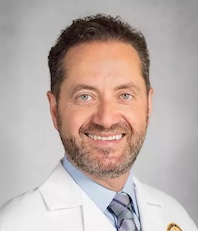
Mahmoud Malas, MD, MHS, is focused on generating high-quality evidence — through institutional and national data — to advance the safety, quality, efficiency and patient-centeredness of vascular and endovascular care. Malas has contributed to more than 450 peer-reviewed publications, 35 book chapters, and over 500 scientific presentations, and has served as principal investigator on more than 40 clinical trials and funded projects. As the founder and director of the Center for Learning and Excellence in Vascular and Endovascular Surgery (CLEVER), Malas is building a collaborative environment where rigorous science, innovation and mentorship intersect. Through regional and national quality initiatives, outcomes research and clinical trials, CLEVER aims to translate data into meaningful improvements in patient care.
-
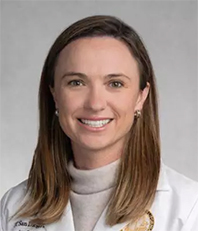
Ann Gaffey, MD, MS, leads a translational research program focused on the mechanisms underlying arterial disease in chronic limb-threatening ischemia, with a particular emphasis on diabetes associated vascular dysfunction. By integrating molecular analysis with data from a unique human tibial artery biobank (derived from patients undergoing amputation), her research seeks to identify actionable targets within the arterial wall that contribute to failed limb salvage. Additionally, in close collaboration with Brian Eliceiri, PhD, Gaffey has advanced engineered extracellular vesicle-based therapies designed to deliver targeted molecular cargo to diseased arteries, reducing major amputation and improving survival in patients with chronic limb-threatening ischemia. Clinically, Gaffey specializes in the management of complex peripheral arterial disease, with a focus on limb salvage in patients with diabetes and advanced tibial artery disease.
-
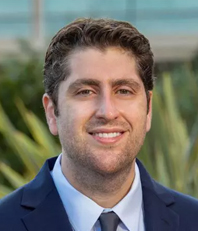
Tom Alsaigh, MD, is an associate professor in the Division of Vascular and Endovascular Surgery at UC San Diego and serves as director of vascular medicine and the UC San Diego Outpatient-Based Vascular Laboratory. He specializes in the comprehensive medical, endovascular and longitudinal management of patients with arterial and venous disease, with particular expertise in peripheral artery disease, venous disorders, wound care and complex vascular medicine. Alsaigh completed his vascular medicine training at Stanford University and has developed a research program focused on vascular genomics and the biological mechanisms underlying atherosclerosis and vascular disease, with the goal of advancing precision medicine approaches to cardiovascular care. As an educator, researcher and clinician, Alsaigh is committed to advancing innovative vascular therapies, mentoring the next generation of physicians and scientists, and improving outcomes for patients through early intervention, multidisciplinary collaboration and evidence-based care.
-

Sadia Ilyas, MD, is a vascular surgeon and health systems researcher focused on improving outcomes for patients with advanced peripheral arterial disease and chronic limb-threatening ischemia. Her work examines how patient-level therapies and system-level care delivery together shape disease trajectories. She also studies surgical education and the development, support, and retention of the vascular surgery workforce.
-
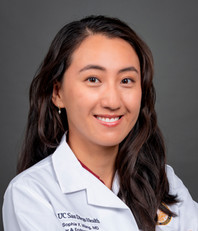
Sophie Wang, MD's research focuses on using engineering principles to improve vascular outcomes and drive surgical innovation. She is interested in studying the biomechanical interactions between endovascular technologies and native vasculature, with the goal of developing next-generation medical devices that address mechanical mismatch. Her research also explores the role of metabolic health in disease prevention and uses multicenter, national clinical databases to investigate the factors that influence patient outcomes.
Division of Vascular and Endovascular Surgery Research
The Division of Vascular and Endovascular Surgery maintains robust basic science and clinical research programs. With over 100 publications in high-impact peer-reviewed journals and over 120 presentations at regional, national and international meetings in the last two years, our faculty continuously make significant contributions to vascular and endovascular surgery.