
Q & A with Yuan Chen
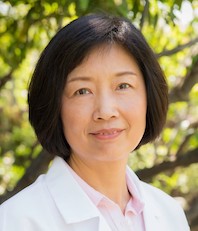 This month, our Q&A features Yuan Chen, PhD, who is Chief of the newly created Division of Surgical Sciences in the UC San Diego Department of Surgery. Professor Chen comes to us by way of City of Hope and is herself a surgeon-scientist, with a laboratory focused on identifying novel mechanisms that can be targeted for developing innovative treatments for cancer and other recalcitrant human diseases. Here, Chen explains her goals for her new role with the division, which will house non-clinical staff and faculty of the Department of Surgery.
Why was the Division of Surgical Sciences created?
The Division of Surgical Sciences (DSS) was created to provide a home for non-clinical research faculty and scientists and provide a collective voice in the affairs of the department. In addition, there is a need to develop policies relevant to non-clinician scientists’ activities. Furthermore, the new division provides a forum to promote cross-disciplinary and cross-disease collaborations and to discuss cross-division needs on resources to support research activities in the Department of Surgery.
What do you see as your primary role as chief?
My primary role is to work with the department chair and vice chairs to provide leadership for the division. My duties include understanding and addressing the needs of division members and representing non-clinician faculty at department-level discussions. I also help to facilitate mentoring junior faculty and developing and executing plans for recruiting non-clinician research faculties. I am also working with department leadership in the development and implementation of policies and initiatives that will enhance research.
How will scientists in the division interact with clinical professors?
There are various ways that scientists in the division interact with clinical faculties. They collaborate on sponsored research projects and pursue grant funding on new research projects. They also collaborate on mentoring surgical residents, postdoctoral fellows and students. They share equipment and laboratory space. They hold joint lab meetings and participate in working groups to name a few.
Why would a PhD such as yourself want to reside in a Department of Surgery, specifically a successful PhD from City of Hope? What are the advantages and what are the challenges?
I joined the Department of Surgery to work alongside surgeon scientists on developing therapeutic strategy for solid tumors. I am excited to join the Department of Surgery because of the outstanding clinical and non-clinical researchers in the department. They conduct highly innovative research using cutting-edge disease models created using human tissues, which are essential for developing novel therapies or diagnostic biomarkers. In addition, as a researcher, I find it stimulating to understand unmet medical needs, so that I can try to make a difference through research.
I always have a strong interest in translational research. Over the years, however, I became increasingly interested in the research environment and opportunities provided by a large research University, such as UC San Diego, to interact and collaborate with faculty of a wide range of disciplines.
One challenge that I have faced is moving to UC San Diego in the middle of the pandemic. I can’t wait for the end of COVID restriction.
What is the overall climate/ environment of UC San Diego and the Mesa that attracted you?
I am excited to come to UC San Diego because of its vibrant biomedical research environment and close interactions with other surrounding institutions, including the Salk Institute, La Jolla Institute for Immunology and the Scripps Research Institute. Additionally, the entrepreneurship spirit at UC San Diego is among the best in the nation. San Diego is also a beautiful place to live.